

A 15-Second Injection, A Different Kind of Freedom: China's First Subcutaneous Lecanemab at Lecheng
In neurology, we spend a great deal of time talking about what a drug does to a disease. We talk less often about what a drug does to a life. The distinction matters more than we sometimes admit.
For early Alzheimer’s disease, the arrival of anti-amyloid therapies was a genuine scientific milestone. For the first time, we had a treatment that targets the underlying pathology rather than only the symptoms. But for many patients, the practical reality of receiving that treatment—regular intravenous infusions at a hospital, often over the course of months and years—was a barrier that quietly eroded the benefit. A drug that requires you to be in a specific place, on a specific schedule, can be difficult to reconcile with a life that does not stop moving.
On October 22, 2026, that barrier became substantially smaller. At Ruijin Hospital Hainan Hospital, in the Boao Lecheng International Medical Tourism Pilot Zone, a 73-year-old woman named Ge became the first patient in China—and the first anywhere outside the United States—to receive the subcutaneous autoinjector formulation of lecanemab. The injection itself took approximately fifteen seconds. What it represented took considerably longer to arrive.
What Early Alzheimer’s Actually Looks Like
Alzheimer’s disease is the most common cause of dementia, a progressive neurodegenerative condition characterized by the accumulation of amyloid-beta plaques and tau tangles in the brain. It affects memory, language, reasoning, and the ability to perform everyday activities. In China, the number of people living with Alzheimer’s disease and related dementias reached nearly 17 million in 2021—approximately 29.8% of the global total.
But the early stage of the disease rarely announces itself with dramatic forgetfulness. It is subtler than that, and that subtlety is precisely what makes it dangerous. Patients in the mild cognitive impairment (MCI) stage—the window in which anti-amyloid therapies are most effective—may continue to converse normally, manage their daily routines, and appear largely unchanged to casual observers. What is actually happening is a quiet erosion of specific cognitive functions: short-term memory becomes unreliable; multitasking becomes exhausting; a task that once required no thought now requires conscious effort.
Ms. Ge’s story is a precise illustration. She lived independently, communicated without difficulty, and managed her own affairs. But there were moments that did not fit. She would put something on the stove, become distracted by another task, and forget that the flame was still burning. Those moments were not dramatic. They were the kind of thing that families often explain away—stress, age, a busy mind. It was only when she sought a formal evaluation that the pattern was recognized for what it was.
Dr. Kang Wenyan, a chief physician in the Department of Neurology at Ruijin Hospital Shanghai, conducted a comprehensive assessment that included history-taking, cognitive scale testing, and neuroimaging. The conclusion was early Alzheimer’s disease. The diagnosis was not a relief, but it was clarifying. It meant there was a window—and a decision to make about how to use it.
The Treatment: From Infusion Chair to Kitchen Table
The subcutaneous formulation of lecanemab (marketed as Leqembi IQLIK) is a fully automated injection device. Each prefilled autoinjector delivers 250 mg of lecanemab; the standard weekly regimen consists of two injections, each taking approximately fifteen seconds. The device is designed to be operated by the patient or a care partner after training, with a shielded needle and automated needle insertion that requires no manual pushing or control of injection speed. The pharmacokinetic exposure achieved with weekly 500 mg subcutaneous dosing is comparable to that of biweekly intravenous dosing at 10 mg/kg, supporting similar clinical and biomarker benefits.

Ms. Ge’s circumstances made the subcutaneous option particularly relevant. She divides her time between Shanghai and New Zealand, and the prospect of arranging regular infusion appointments across two countries was, in her words, a source of persistent difficulty. When she learned that the subcutaneous formulation had been approved for use at Ruijin Hainan Hospital under Lecheng’s pilot policy, her response was immediate and unguarded: “Finally.”
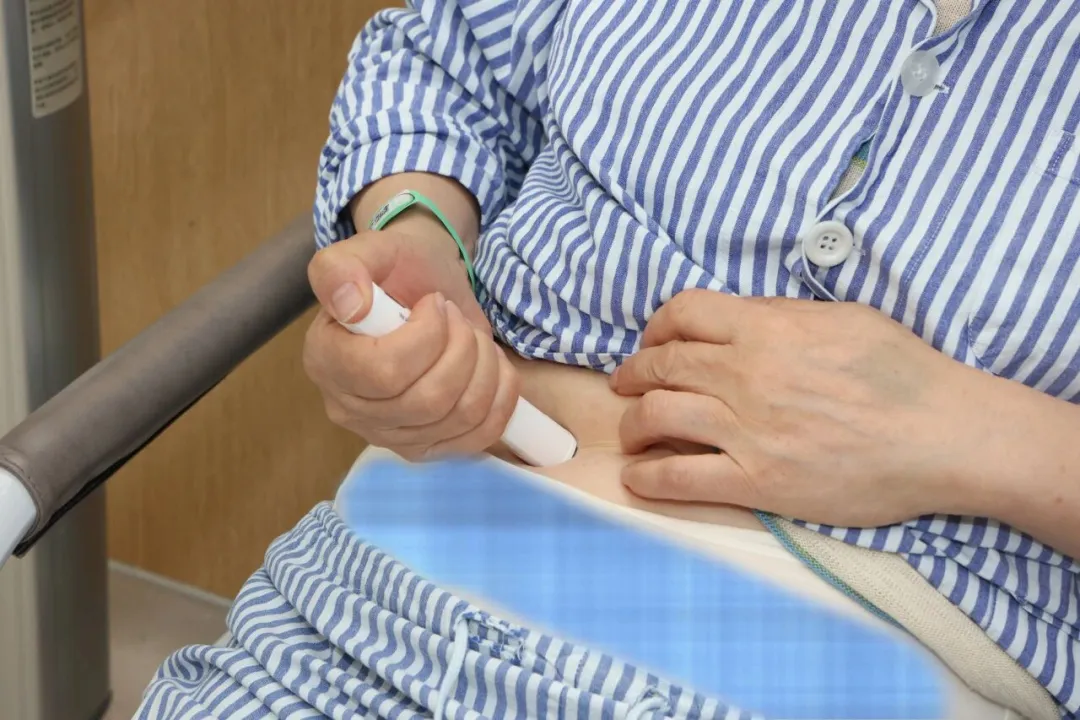
The first administration was carried out under the guidance of Dr. Liu Jun, Director of Neurology at Ruijin Hospital Shanghai; Dr. Tang Huidong, Chief Physician of Geriatrics; and Dr. Kang Wenyan, who led the clinical evaluation and treatment. Ms. Ge completed the injection herself, after training. Her description of the experience was characteristically practical: the device was easy to operate, the discomfort was minimal, and it would not disrupt the rhythm of her life.

Why the Subcutaneous Route Matters Beyond Convenience
The subcutaneous formulation of lecanemab (marketed as Leqembi IQLIK) is a fully automated injection device. Each prefilled autoinjector delivers 250 mg of lecanemab; the standard weekly regimen consists of two injections, each taking approximately fifteen seconds. The device is designed to be operated by the patient or a care partner after training, with a shielded needle and automated needle insertion that requires no manual pushing or control of injection speed. The pharmacokinetic exposure achieved with weekly 500 mg subcutaneous dosing is comparable to that of biweekly intravenous dosing at 10 mg/kg, supporting similar clinical and biomarker benefits.
Ms. Ge’s circumstances made the subcutaneous option particularly relevant. She divides her time between Shanghai and New Zealand, and the prospect of arranging regular infusion appointments across two countries was, in her words, a source of persistent difficulty. When she learned that the subcutaneous formulation had been approved for use at Ruijin Hainan Hospital under Lecheng’s pilot policy, her response was immediate and unguarded: “Finally.”

The first administration was carried out under the guidance of Dr. Liu Jun, Director of Neurology at Ruijin Hospital Shanghai; Dr. Tang Huidong, Chief Physician of Geriatrics; and Dr. Kang Wenyan, who led the clinical evaluation and treatment. Ms. Ge completed the injection herself, after training. Her description of the experience was characteristically practical: the device was easy to operate, the discomfort was minimal, and it would not disrupt the rhythm of her life.
团队与乐城平台
The clinical team behind this milestone reflects the depth of Ruijin Hospital’s neurology program and the collaborative model that Lecheng enables. Dr. Liu Jun is a leading figure in Alzheimer’s research in China and has led multiple real-world studies of lecanemab in Chinese patients under the Lecheng pilot framework. Dr. Tang Huidong brings geriatric expertise to the management of older patients with complex needs. Dr. Kang Wenyan, who conducted Ms. Ge’s evaluation and oversaw her treatment, has been directly involved in the clinical implementation of anti-amyloid therapies at Lecheng since their earliest availability.
Ruijin Hainan Hospital has been at the center of Alzheimer’s innovation in China. Lecanemab was first used in the country at this hospital in late 2023, and the institution has since accumulated experience with nearly one hundred patients treated under the pilot zone’s special access policies. The subcutaneous formulation was approved for use at the hospital in August 2026, less than a month after its U.S. approval in July—a timeline that reflects the efficiency of Lecheng’s “pioneering pilot” pathway.
The significance of this extends beyond a single patient or a single drug. Lecheng was designed to function as a bridge between international innovation and Chinese clinical practice, and Alzheimer’s disease has become one of the clearest demonstrations of that mission. Patients who would otherwise wait years for access to therapies like this now have a regulated, evidence-based pathway to them. And for those who have already received a diagnosis—the moment when the future becomes uncertain—that pathway is not an abstraction. It is a decision they can make now.
Ms. Ge’s injection took fifteen seconds. But the fifteen seconds were not the point. The point was everything that came before: the recognition that something was wrong, the courage to be evaluated, the arrival of a therapy that could be administered at home, and the infrastructure that made it possible in Hainan rather than years later. For patients living with early Alzheimer’s, that is what progress looks like—not a miracle, but a sequence of concrete steps that make the future a little less frightening.


