

Skip to content
LechengMedical LogoLechengMedical Logo
  • HOME
  • ABOUT
  • SUCCESS STORY
    • Turkish Doctor – COPD Treatment
    • Russian Professor – BNCT Treatment
    • LHON Patients from Japan & Myanmar
    • Anti-Aging & Stem Cells
    • Orthopedic & Rehabilitation
    • People Reviews
  • PRICE
    • Physical Checkup
    • Medical Tourism
    • Stem Cell Therapies
    • Double Filtration Plasmapheresis
  • ARTICLES
    • Why Choose Boao Lecheng?
    • Hassle-Free Entry to Hainan
    • Frequently Asked Questions (FAQ)
  • MAKE APPOINTMENT

SONOVEIN HIFU: Non-Invasive Varicose Vein Cure – Now at Lecheng

I still remember the first time I truly understood what varicose veins meant to a patient, beyond the clinical photographs and the Doppler ultrasound reports. She was a 47-year-old schoolteacher from Guangzhou who had spent twenty years standing in front of a classroom. By the time she walked into my clinic, her legs were a roadmap of bulging, tortuous veins — the great saphenous vein on her left leg was so dilated that she could feel the pulse of blood reflux with her own fingers. She had tried compression stockings, which she hated because they were hot and uncomfortable in the southern humidity. She had tried sclerotherapy, which worked temporarily but left her with stubborn brownish staining. She had been told she was a candidate for endovenous laser ablation, but the thought of a catheter being threaded up her vein, of tumescent anesthesia injections that would leave her leg swollen for days, made her postpone the procedure year after year.

“Doctor,” she said to me, “is there really no way to fix this without someone cutting into me or sticking a wire up my leg?”

For years, I had no satisfactory answer. Today, I do.

What Are Varicose Veins, and Why Does Almost Everyone Know Someone Who Has Them?

Varicose veins are swollen, twisted veins that lie just beneath the surface of the skin, most commonly in the legs. They occur when the one-way valves inside the veins — valves that normally prevent blood from flowing backward as it travels up toward the heart — become incompetent or damaged. When these valves fail, blood pools in the veins, causing them to stretch, bulge, and become visibly tortuous. The condition is medically referred to as chronic venous insufficiency, and it affects an estimated 25% of the adult population in Western countries.
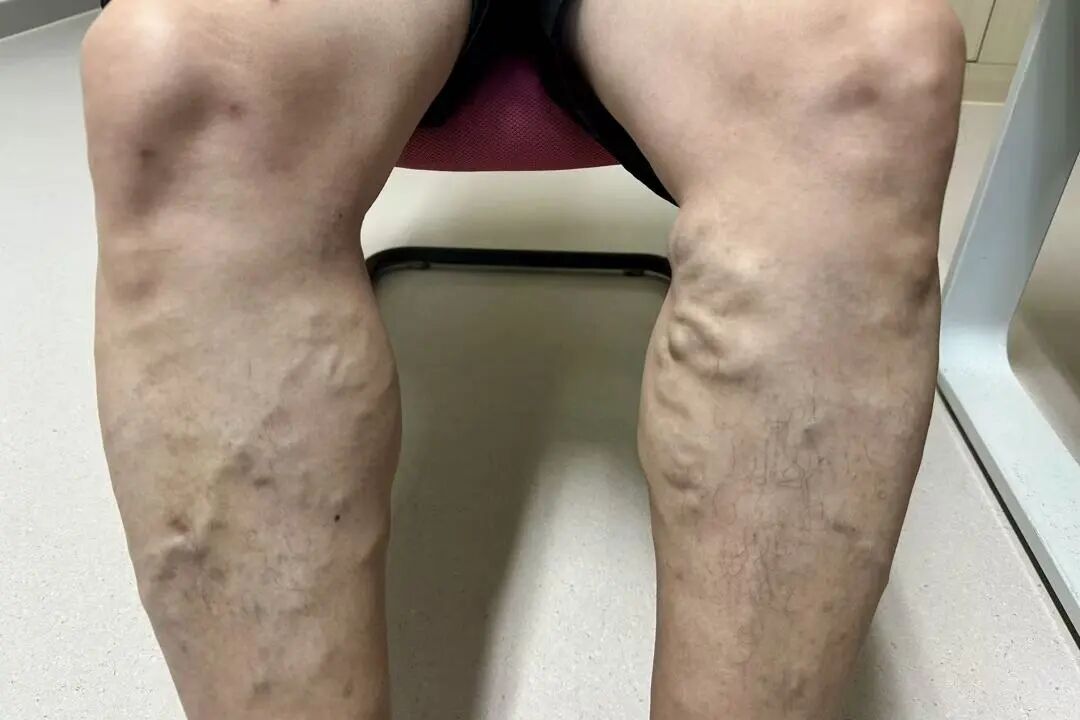
In China, the numbers are equally staggering. According to conservative estimates, there are more than 100 million patients with varicose veins in the country. Why so many? The causes are multifactorial, but several key drivers stand out. First, genetics play a significant role — if your parents had varicose veins, your risk is substantially elevated. Second, prolonged standing or sitting is a major risk factor, and China has a massive workforce employed in occupations that require exactly that: retail workers, teachers, factory assembly line operators, healthcare professionals, and office workers who spend eight or more hours a day at a desk. Third, the aging population means more people are living long enough to develop the degenerative changes in venous valves that come with advancing age. Fourth, pregnancy is a powerful trigger — the hormonal changes and increased venous pressure during gestation can precipitate or worsen varicose veins, and China’s large population of women of childbearing age means this is a significant contributor. Finally, obesity and a sedentary lifestyle, both rising rapidly in China, further compound the problem.

For most patients, varicose veins are more than a cosmetic concern. The symptoms include aching, heaviness, fatigue, and throbbing in the legs, particularly after prolonged standing. Many patients experience nocturnal leg cramps, restless legs, and ankle swelling. In advanced cases, skin changes — hyperpigmentation, eczema, lipodermatosclerosis — can occur, and in the most severe cases, venous ulcers may develop. The impact on quality of life is substantial, yet many patients delay treatment because the available options have traditionally been either invasive or only partially effective.

The traditional treatment landscape for varicose veins has included compression stockings (which only manage symptoms and do not treat the underlying cause), foam sclerotherapy (which is effective for smaller veins but less reliable for large truncal veins), endovenous thermal ablation (laser or radiofrequency, which requires a catheter inserted into the vein, tumescent anesthesia, and carries risks of nerve injury and skin burns), and surgical stripping (which is invasive, requires general anesthesia, and leaves scars). Each of these options has significant drawbacks, and many patients — like my schoolteacher from Guangzhou — simply choose to live with their symptoms rather than undergo a procedure they find intimidating.

SONOVEIN: A Paradigm Shift in Varicose Vein Treatment

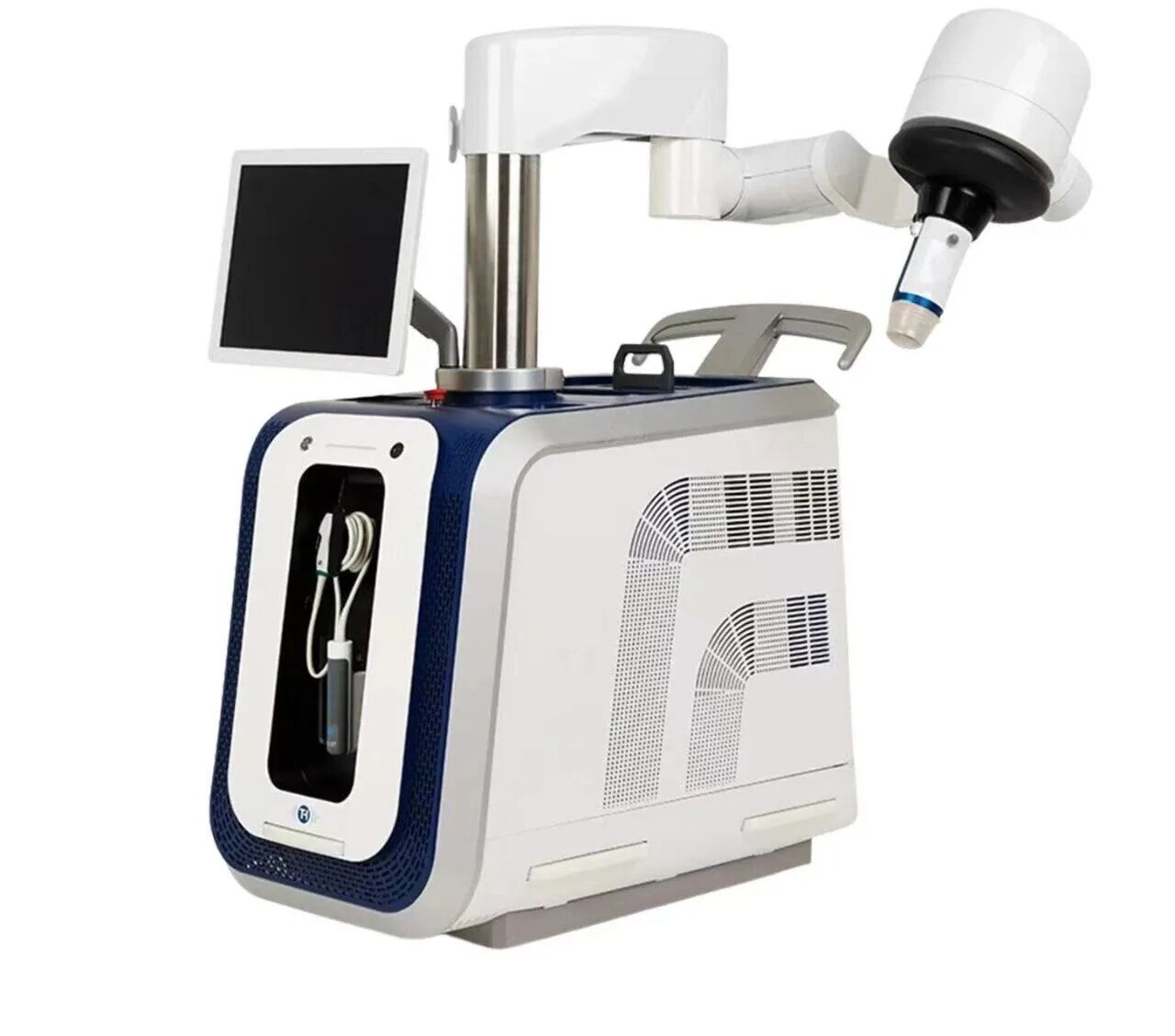
This is where SONOVEIN changes everything. SONOVEIN is the world’s first robotic platform for the non-invasive treatment of varicose veins using High-Intensity Focused Ultrasound (HIFU). It was developed by Theraclion, a French MedTech company based in Malakoff, near Paris, that has been pioneering the use of focused ultrasound for non-invasive therapy.

The platform was first introduced in Europe in 2019 and was brought to the UK by Professor Mark Whiteley at The Whiteley Clinic. Since then, it has been adopted by more than a dozen medical centers worldwide and used in over 3,500 procedures. And now, after years of clinical validation and regulatory progress, SONOVEIN has arrived in China.

On June 4, 2026, Theraclion announced the deployment of the first SONOVEIN system at Boao Super Hospital in Hainan Province, supported by its joint venture with strategic partner Inner Mongolia Furui Medical Science Co., Ltd. The system was delivered to the clinical site in May 2026, with first patient treatments expected to begin in the coming weeks. This deployment follows the recent granting of authorization for SONOVEIN to be used as an urgently needed imported medical device within Boao Super Hospital in the Boao Lecheng International Medical Tourism Pilot Zone.

I cannot overstate how significant this is. For the first time, Chinese patients have access to a treatment that is truly non-invasive — no incisions, no catheters, no needles, no anesthesia, and no scars.

How Does SONOVEIN Work? The Science of Echotherapy

To understand why SONOVEIN is so revolutionary, it helps to understand the physics behind it. The system uses High-Intensity Focused Ultrasound — sometimes referred to as echotherapy — to deliver precisely focused ultrasound energy from outside the body to a targeted point inside the vein.

The SONOVEIN device includes two integrated ultrasound systems: one to visualize and target the vein in real time, and another to deliver the therapeutic ultrasound to the precise treatment area. The system is robotic, meaning the physician can plan the treatment on a touchscreen, and the robotic arm positions the transducer with sub-millimeter precision. The entire procedure is performed with the patient lying comfortably, fully awake, without any sedation or local anesthesia.

What happens at the focal point? The concentrated ultrasound energy generates heat — typically around 70 to 85 degrees Celsius — which causes thermocoagulation of the vein wall. The collagen-rich vein wall shrinks, collapses, and eventually undergoes fibrosis, sealing the vein permanently. The blood that was pooling in the incompetent vein is redirected through healthier veins, and the symptoms — the aching, the heaviness, the swelling — gradually resolve.

The entire treatment is performed as an outpatient procedure. There is no operating room, no recovery room, and no hospital stay. Patients can return to their normal activities immediately after the procedure. Compression stockings may be worn for comfort, but they are not medically required.

What Are the Advantages Over Traditional Treatments?

Let me be direct about why this matters. Compared to endovenous laser ablation or radiofrequency ablation — which are currently considered the gold standard for treating incompetent saphenous veins — SONOVEIN offers several transformative advantages.
SONOVEIN HIFU: Non-Invasive Varicose Vein Cure – Now at Lecheng

First, it is completely non-invasive. There are no incisions, no punctures, no catheters inserted into the vein. The ultrasound energy passes through the skin without breaking it. This eliminates the risks of infection, bleeding, and nerve injury that are associated with catheter-based procedures. In fact, one of the key findings from the clinical literature is that HIFU minimizes risks associated with thermal ablation, such as skin burns and nerve damage.

Second, there is no tumescent anesthesia. Endovenous thermal ablation requires the injection of large volumes of diluted local anesthetic around the vein — typically 200 to 500 milliliters per leg — to protect the surrounding tissues from thermal injury and to compress the vein. This is often the most uncomfortable part of the procedure for patients. SONOVEIN requires no injections whatsoever.

Third, recovery is immediate. Patients can walk out of the clinic and resume their normal activities the same day. There is no need for compression stockings (though some patients choose to wear them), no downtime, and no restrictions on driving or work.

Fourth, there are no scars. Because the energy is delivered through intact skin, there is no wound, no suture, and no visible mark. For patients who are concerned about the cosmetic appearance of their legs, this is a significant advantage.

Fifth, the treatment is precise and reproducible. The robotic platform ensures that the ultrasound energy is focused exactly where it needs to be, with real-time imaging guidance. This reduces the variability that can occur with manual catheter-based techniques.

And sixth, the treatment can be applied to multiple vein segments in a single session, and can be repeated if necessary, without the cumulative tissue trauma that would occur with repeated invasive procedures.

What Does the Clinical Evidence Show?

I am a clinician who bases my recommendations on evidence, not marketing. And the evidence for SONOVEIN is, frankly, compelling.

The most robust data come from the VEINRESET FDA pivotal study, a multicenter trial conducted across four international centers. The results, announced in September 2025, showed that at 12 months, 96.8% of treated patients achieved complete occlusion of the great saphenous vein — the primary endpoint — and 98.5% showed no reflux. Pain was eliminated in all patients, and symptoms had completely disappeared in most of them. No serious or unexpected adverse events were reported during the entire study period; only one mild adverse event was documented.

These results are consistent with a growing body of peer-reviewed literature published in 2025. One study, published in Phlebology, found 94% to 97% efficacy on 164 veins at 12 months. Another study, published in the Journal of Vascular Surgery: Venous and Lymphatic Disorders, demonstrated 95% efficacy on 204 legs at 24 months. A third study, also in Phlebology, reported 100% efficacy at 12 months on 25 perforator veins.

A larger retrospective study published in early 2025 included 204 limbs in 183 patients treated with the SONOVEIN device from March 2020 to February 2024. The primary leak point occlusion rate at 24 months was 95.5%, and the secondary closure rate was 95.7%. No major complications were observed. The authors concluded that HIFU is an effective and safe non-invasive alternative for chronic venous insufficiency treatment.

What these numbers tell me, as a practitioner, is that SONOVEIN is not a fringe experimental technology. It is a clinically validated, highly effective treatment that has been tested in thousands of patients across multiple centers and countries. And it is now available in China.

International Accreditations: Why This Device Is Trustworthy

When I recommend a medical device to a patient, I want to know that it has been scrutinized by the world’s most stringent regulatory bodies. SONOVEIN has passed that test with flying colors.

In Europe, SONOVEIN obtained CE certification under the Medical Device Regulation (MDR, EU 2017/745) in September 2025. The MDR is widely considered one of the strictest regulatory frameworks for medical devices in the world, with rigorous requirements for safety, quality, and clinical performance. The independent assessment confirmed that both the device and Theraclion’s quality management system fully comply with MDR requirements.

In the United States, Theraclion has submitted the full dataset from its FDA pivotal study to the FDA as part of the De Novo clearance process. Based on typical FDA review timelines, a decision is anticipated around mid-2026. FDA clearance would authorize U.S. commercialization, giving access to the world’s largest varicose vein treatment market.

In China, SONOVEIN has successfully passed the GB 9706.1-2020 Chinese standard for the safety of electromedical equipment — the national equivalent of the international IEC 60601-1 standard. This certification confirms that SONOVEIN meets China’s latest requirements for electrical safety and focused ultrasound emissions. From a regulatory standpoint, compliance with GB 9706.1-2020 is a crucial milestone in the NMPA approval process. The company has already completed the required technical testing phase and submitted its NMPA registration dossier at the end of 2025.

These regulatory achievements — CE MDR certification, FDA submission, and GB 9706.1-2020 compliance — provide a level of assurance that few novel medical devices can match.

Why Lecheng? Why Boao Super Hospital?

The Boao Lecheng International Medical Tourism Pilot Zone was established as China’s only national-level medical special zone, authorized by the State Council to expedite the import and clinical application of innovative medical devices and drugs that have not yet received full NMPA approval. The zone operates under a “first-pilot, first-use” policy: if a therapy is already approved by a major international regulatory authority — such as the CE mark — and if it addresses a critical unmet clinical need in China, the zone can authorize its limited clinical use at designated hospitals.

Boao Super Hospital is one of Lecheng’s flagship institutions. The hospital has the clinical infrastructure, regulatory oversight, and specialized expertise to deliver this therapy safely. The SONOVEIN system was deployed at Boao Super Hospital in May 2026, and the first patient treatments are expected to begin in the coming weeks.

For patients, this means access to a world-class innovation without the need to travel overseas. It means receiving treatment at a facility that meets international standards, under the supervision of physicians trained in the latest evidence-based protocols.

A Call to Action: Let Us Treat Your Varicose Veins Without Surgery

I think about my schoolteacher from Guangzhou often. She was the first patient I told about SONOVEIN when I learned it was coming to Lecheng. She called me last week, after her initial consultation at Boao Super Hospital. “Doctor,” she said, “I lay on the table, fully awake, and the machine did its work. I felt nothing but a mild warmth. Twenty minutes later, I walked out. There is no scar. There is no pain. And for the first time in twenty years, my leg does not ache at the end of the day.”

That is what this technology represents. It is not a miracle cure for every vein problem — patients with very large or tortuous veins may still require additional treatment, and the procedure is not suitable for all anatomical variations. But for the right patient — those with symptomatic varicose veins affecting the great saphenous vein, small saphenous vein, anterior accessory saphenous vein, or small incompetent perforator veins — SONOVEIN offers a genuinely transformative option.

If you or someone you love has been suffering from varicose veins — the aching, the heaviness, the swelling, the visible bulging veins that make you uncomfortable wearing shorts or skirts — I invite you to consider whether SONOVEIN might be right for you. The treatment is non-invasive, performed in an outpatient setting, completed in under an hour, and allows you to return to your normal activities immediately. The clinical evidence is robust, the regulatory approvals are in place, and the technology is now available in China for the first time.

To learn more, please contact our vascular surgery service at Boao Super Hospital in the Lecheng Pilot Zone. Our team will review your medical history, perform a detailed duplex ultrasound assessment to confirm your suitability, and determine whether SONOVEIN is the right option for you. We are here to answer your questions about the treatment, the travel arrangements to Hainan, and the costs involved.

You do not need to live with the pain, the discomfort, or the embarrassment of varicose veins. There is a better way. Let us show you.

Your trusted local gateway to Boao Lecheng International Medical Tourism Pilot Zone. We bridge the gap between global patients and world-class innovative healthcare.

LEARN MORE ABOUT US

CONTACT INFORMATION

Email: support@lechengmedical.com 

Tel: (+86) 400-118-118

For privacy reasons Google Maps needs your permission to be loaded. For more details, please see our Privacy Policy.

MEDICAL DEPARTMENTS

  • Oncology Treatment

  • Orthopedic/Rehab

  • Anti-Aging/Stem Cells

  • TCM & Wellness

  • Precision Health Screening

  • Other

© Copyright 2025 - 2026 LechengMedical.com, All Rights Reserved. | Privacy Policy | Terms of Service | Medical Disclaimer

Page load link
This website uses cookies and third party services. Settings
Ok Reject
English
Chinese
Go to Top