

Rheumatic diseases are a diverse group of disorders that primarily affect the joints, muscles, and connective tissues. They are often characterized by inflammation, pain, and functional impairment, and can significantly reduce patients’ quality of life. Conditions such as rheumatoid arthritis, systemic lupus erythematosus, and osteoporosis fall under this broad category. Traditional treatments for these diseases mainly focus on symptom management, but they often come with various side effects and may not address the root cause of the disease. This is where stem cell therapy, particularly using mesenchymal stem cells (MSCs), shows great promise.
Stem Cell Comparison for Autoimmune Disease Treatment
There are different types of stem cells, including embryonic stem cells (ESCs), induced pluripotent stem cells (iPSCs), and adult stem cells (ASCs). ESCs are derived from embryos and can differentiate into any cell type in the body. However, their use is highly controversial due to the ethical concerns surrounding embryo destruction. iPSCs are generated by reprogramming adult cells back to a pluripotent state. While they avoid the ethical issues associated with ESCs, they still carry risks of tumorigenesis and immune rejection. ASCs, on the other hand, are found in various adult tissues, such as bone marrow, adipose tissue, and umbilical cord blood. Among ASCs, MSCs are a particularly attractive option for treating rheumatic diseases.
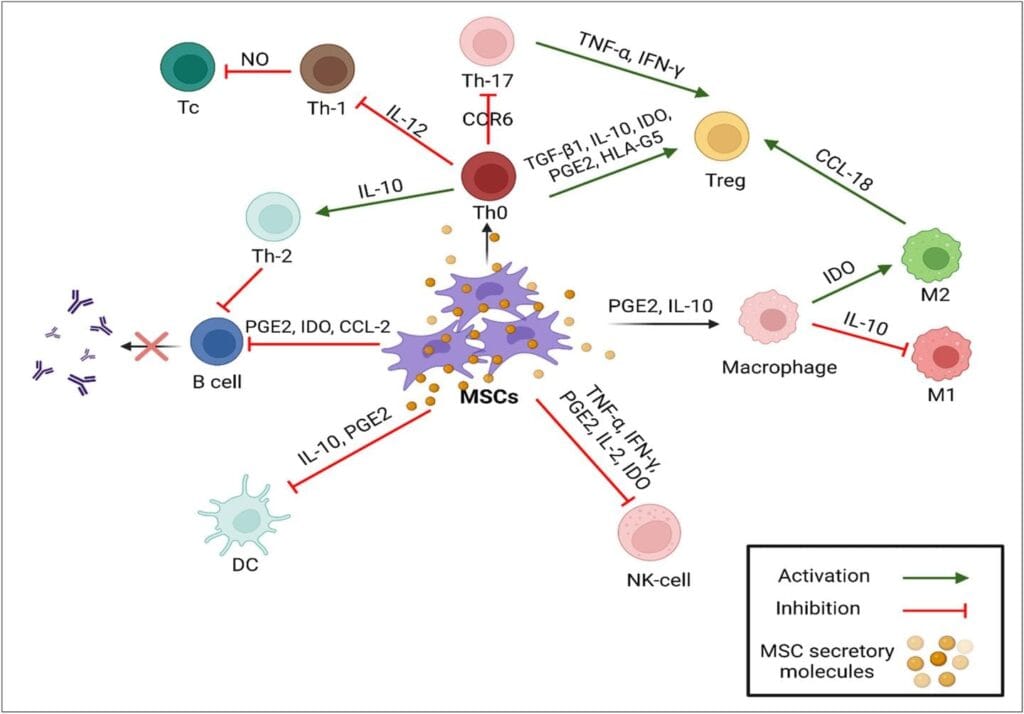
Immunomodulatory effects of MSCs
MSCs offer several advantages. They are easily accessible from multiple sources, exhibit low immunogenicity, and secrete a variety of cytokines and growth factors with immunomodulatory and anti-inflammatory properties. These characteristics reduce the likelihood of immune rejection and make them more suitable for autologous and allogeneic transplantation, which is crucial in the treatment of chronic and autoimmune-related rheumatic diseases.
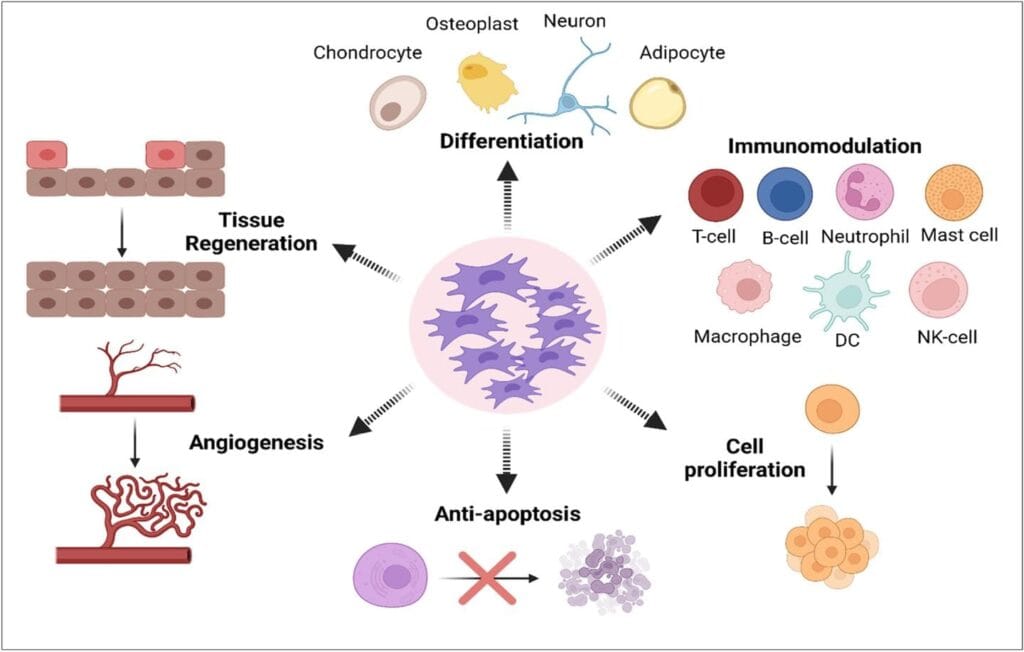
Biological effects of mesenchymal stem cells (MSCs)
Application of MSCs in Specific Rheumatic Diseases
- Systemic Lupus Erythematosus (SLE): SLE is a chronic autoimmune disease that can affect multiple organs, including the skin, joints, kidneys, and heart. Treatment is challenging because of its complex pathogenesis and the high risk of organ damage. MSCs can modulate the immune system by regulating the function of T and B lymphocytes, reducing autoantibody production. In some clinical trials, patients with SLE who received MSC therapy showed improved clinical symptoms, such as reduced disease activity scores and improved organ function. For example, a patient with severe lupus nephritis showed significant improvement in kidney function after MSC treatment.
- Rheumatoid Arthritis (RA): RA is an autoimmune disorder characterized by chronic inflammation of the joints, leading to joint destruction and disability. Current treatments aim to control inflammation but often have limited long – term efficacy. MSCs can home to inflamed joints, secrete anti – inflammatory factors, and promote tissue repair. Clinical studies have reported that MSC therapy can reduce joint swelling, pain, and improve joint function in RA patients.
- Ankylosing Spondylitis (AS): AS is a chronic inflammatory disease that mainly affects the spine and sacroiliac joints, causing pain, stiffness, and progressive spinal deformity. Treatment challenges include the difficulty in reversing joint damage. MSCs have the potential to reduce inflammation and promote bone and cartilage repair. Some early – stage clinical trials have shown that MSC injection can relieve pain and improve spinal mobility in AS patients.
- Osteoarthritis (OA): OA is a degenerative joint disease characterized by the breakdown of joint cartilage and underlying bone. It is a common cause of pain and disability in the elderly. MSCs can differentiate into chondrocytes and secrete extracellular matrix components, which can help repair damaged cartilage. In a clinical case, an OA patient experienced reduced joint pain and improved mobility after receiving MSC-based therapy.
- Osteoporosis (OP): OP is a condition characterized by low bone mass and micro – architectural deterioration of bone tissue, leading to an increased risk of fractures. Traditional treatments mainly focus on preventing further bone loss. MSCs can differentiate into osteoblasts, which are responsible for bone formation. Preliminary studies suggest that MSC therapy may enhance bone density and strength in OP patients.
- Sjögren’s Syndrome (SS): SS is an autoimmune disease that affects the exocrine glands, resulting in dry eyes and dry mouth. Treatment is mainly symptomatic. MSCs can regulate the immune response and promote the regeneration of damaged glandular tissues. Some small-scale clinical studies have reported improvement in dryness symptoms after MSC treatment.
- Crohn’s Disease (CD): CD is a chronic inflammatory bowel disease that can affect any part of the gastrointestinal tract. Treatment is challenging due to its relapsing-remitting nature. MSCs can modulate the gut immune system and promote tissue repair. In some clinical cases, patients with CD showed reduced inflammation and improved intestinal function after MSC infusion.
- Fibromyalgia (FM): FM is a chronic pain disorder characterized by widespread musculoskeletal pain, fatigue, and sleep disturbances. The etiology is not fully understood, and treatment options are limited. MSCs may have a role in modulating the pain – related neural pathways and reducing inflammation. Although clinical research is still in the early stages, some patients reported pain relief after MSC treatment.
- Systemic Sclerosis (SSc): SSc is a rare autoimmune disease characterized by excessive fibrosis of the skin and internal organs. Treatment is difficult because of the progressive nature of fibrosis. MSCs can inhibit fibroblast activation and collagen synthesis, and some clinical studies have shown that MSC therapy may slow down the progression of the disease and improve skin thickness and organ function.
- Dermatomyositis (DM) and Polymyositis (PM): DM and PM are inflammatory myopathies characterized by muscle weakness and inflammation. Treatment often involves the use of immunosuppressive drugs with significant side effects. MSCs can regulate the immune response and promote muscle repair. In some clinical cases, patients with DM and PM showed improvement in muscle strength and reduced muscle inflammation after MSC treatment.
In conclusion, mesenchymal stem cells hold great potential in the treatment of rheumatic diseases. Their unique immunomodulatory and regenerative properties make them a promising alternative to traditional treatments. Although larger-scale clinical trials are needed to fully establish their safety and efficacy, the current evidence suggests that MSCs may revolutionize the treatment of these debilitating diseases in the future.
